Popular Searches
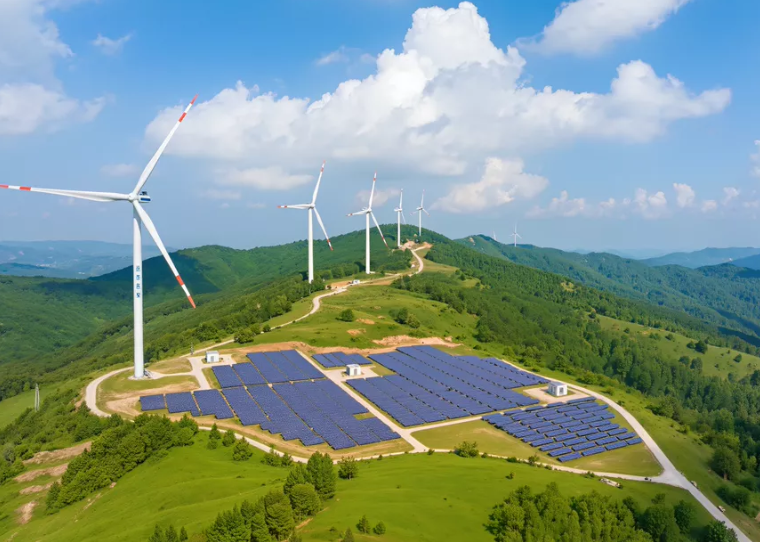
Against the backdrop of accelerated development of the new-type power system, China’s thermal power industry will complete functional restructuring during the 15th Five-Year Plan period. Thermal power units will completely step down from their traditional role as base-load power suppliers and transform into regulatory power sources providing peak-shaving, frequency modulation and backup support for new energy consumption. Normal operating conditions will include deep peak-shaving below 30% rated load, stable combustion under ultra-low load, and frequent load ramping. In the past, coal-fired units mostly operated under high-load steady-state conditions, while ultra-low-load deep peak-shaving only served as an emergency mode. From the 15th Five-Year Plan onward, volatility brought by grid-connected new energy will force units to operate for long periods under extreme conditions below 30% rated load. The operating boundaries, load characteristics and working modes of medium-speed coal mills will undergo disruptive changes. Designed for high-load steady-state conditions, the traditional static balancing technology using adjustable orifice plates for pulverized-coal pipes can no longer satisfy operational requirements for ultra-low-load and dynamically variable-load conditions. It has become a core technical bottleneck that induces air-pulverized-coal imbalance, uneven furnace heat load and local overheating of heating surfaces. Combined with the thermal power transformation trend of the 15th Five-Year Plan, this paper systematically analyzes the iterative rules of operating characteristics for medium-speed coal mills under new deep-peak-shaving conditions, demonstrates inherent adaptability defects of static balancing technology, clarifies the coupling mechanism between air velocity imbalance and local overheating, and puts forward a technical system for dynamic air-velocity balancing and overheating prevention suitable for new thermal-power operating conditions. It provides technical references for safe and efficient deep peak-shaving of coal-fired units under the new-type power system.
I. Functional Transformation of Thermal Power and Disruptive Changes in Operating Conditions of Pulverizing Systems During the 15th Five-Year Plan
(I) Iterative Upgrading of Functional Positioning and Operating Modes for Thermal Power
The 15th Five-Year Plan represents a critical stage for the formation of the new-type power system. As the installed capacity of wind and solar new energy keeps rising, its random and volatile grid-connection characteristics impose higher requirements on grid stability control. Accordingly, thermal power undergoes thorough functional transformation, shifting from a traditional quantity-oriented base-load power source to a flexible regulatory power source accommodating new-energy consumption, with fully reconstructed unit operation logic. Traditional thermal power mainly runs at high load with long steady-state durations, featuring small peak-shaving ranges and low load-changing frequencies; the operating-time share of ultra-low-load conditions is less than 5%. After the 15th Five-Year Plan, units will routinely undertake stringent working conditions including deep peak-shaving below 30% rated load, wide-range load variation, frequent start-stop and rapid load ramping. The proportion of ultra-low-load operation will rise above 30%, and pulverizing systems will operate far away from their rated design conditions for long durations.
Changes in operating conditions completely alter the working boundaries of medium-speed coal mills. Under traditional conditions, coal mills run stably within 50%-100% rated output, with primary-air parameters, pulverized-coal transportation and internal mill flow fields complying with design criteria. Under new conditions, mills operate non-steadily for long hours at low output. Operating features of low air pressure, low air velocity and variable load make equipment resistance characteristics and air-coal distribution patterns deviate completely from design and high-load conditions; traditional steady-state-oriented regulation modes become ineffective.
(II) Variations in Core Operating Characteristics of Medium-speed Coal Mills Under New Working Conditions
Compared with traditional high-load steady-state operation, medium-speed coal mills exhibit four brand-new operating features under routine deep-peak-shaving conditions in the 15th Five-Year Plan, which constitute structural incentives for pulverized-coal pipe air-velocity imbalance. First, the regulation margin of primary air is substantially reduced. Under ultra-low load, air volume and air pressure cannot linearly match coal feed rate. To satisfy drying and anti-clogging requirements, primary-air parameters are fixed within a low-value range, significantly weakening the anti-disturbance capacity of flow fields. Second, coal mills run inefficiently at extremely low output. Grinding quality deteriorates, fluctuations in pulverized-coal fineness intensify, and discrepancies in pulverized-coal delivery volume and particle-size distribution among individual coal pipes keep expanding. Third, frequent unit load variations trigger dynamic disturbances in pulverizing systems. Flow fields inside mills and pipeline resistance change in real time, breaking steady-state resistance balance continuously. Fourth, during deep peak-shaving, low output of individual mills and stable combustion with fewer mills become common. Coupled deviations in air-coal distribution between mills and within a single mill keep accumulating.
II. Adaptability Defects of Traditional Static Balancing Technology with Adjustable Orifice Plates
At present, pulverized-coal boilers across China generally adopt static balancing with adjustable orifice plates. Designed for high-load steady-state unit conditions, this technology compensates for inherent pipeline resistance differences via one-time adjustment of orifice opening, so as to realize uniform air-velocity distribution of pulverized-coal pipes under rated conditions, matching traditional base-load operation modes. Nevertheless, under new routine working conditions of ultra-low-load deep peak-shaving and dynamic load variation in the 15th Five-Year Plan, this technology has fundamental adaptability defects and can no longer meet requirements for safe and stable unit operation.
(I) Static Balancing Only Suits High-load Steady-state Conditions, Fails for Ultra-low-load Non-steady-state Conditions
The core design logic of static balancing fits high-load turbulent steady-state and constant-resistance working conditions; calibration is performed under 80%-100% rated load. At high load, primary-air flow velocity is high with strong turbulence intensity, and influences from inherent pipeline resistance differences are negligible. Static calibration can achieve uniform air velocity. Under ultra-low-load conditions below 30% rated load, however, primary-air velocity drops sharply, and airflow transitions from turbulent flow to laminar or weak-turbulent flow. Flow-field properties, pipeline resistance and throttling characteristics of orifice plates undergo qualitative changes. Static openings calibrated for high load will cause sharp amplification of throttling deviations, and the air-velocity distribution system collapses completely. Furthermore, static balancing adopts fixed-value calibration and cannot adapt to dynamic resistance changes during load variation; air-velocity balance fails immediately after load fluctuates.
(II) Inherent Defects of Orifice-plate Equipment Are Maximized Under New Conditions
Traditional mechanical adjustable orifice plates suffer from inherent drawbacks including poor regulation linearity, low precision, susceptibility to pulverized-coal accumulation and jamming, as well as distorted feedback. Under high-load conditions, high-velocity airflow with strong purging effects can offset these defects. In ultra-low-load conditions, by contrast, flow-field purging capacity is weak. Pulverized-coal accumulation and coking tend to occur at orifice gaps, pipeline elbows and throttling zones, continuously altering pipeline flow resistance. Meanwhile, regulation-precision requirements for air velocity rise by more than three times under ultra-low-load circumstances; minor wear or jamming of orifice plates will trigger substantial air-velocity deviations. Static balancing cannot correct resistance offset or clear accumulated pulverized coal in real time, resulting in a vicious cycle: pulverized-coal accumulation-resistance distortion-air-velocity imbalance-aggravated pulverized-coal accumulation. Measured data show that for pulverized-coal pipes after static balancing, the maximum air-volume deviation reaches 60% under ultra-low-load conditions, and pulverized-coal-mass deviation exceeds 25%. Some power plants even experience pulverized-coal sedimentation, coking and blockage inside pulverized-coal pipes, posing severe threats to production safety.
(III) Static Balancing Cannot Adapt to Differentiated Flow-splitting Characteristics of Coal Mills Under New Working Conditions
Under traditional full-output conditions, internal-mill flow fields are uniform and stable, and each pulverized-coal pipe obtains consistent air and pulverized-coal feed. Wind-velocity balancing can be realized merely by compensating external pipeline resistance. Under new 15th-Five-Year-Plan conditions, however, coal mills run at low output for long durations. Eddy currents and biased flows inside mills occur frequently. Flow-splitting rules inside mills change dynamically with varying load, coal quality and classifier rotating speed, leading to continuous fluctuations in air-coal supply deviations at pulverized-coal pipe inlets. Static adjustable orifice plates can only correct fixed pipeline resistance. They fail to adapt to dynamic variations of internal-mill flow fields and cannot eliminate systematic air-coal distribution deviations from the source. Hence balancing effects treat symptoms rather than root causes.
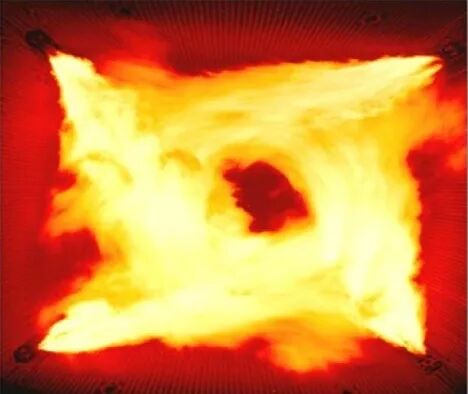
III. Evolution Mechanism of Uneven Heat Load and Local Overheating Induced by Pulverized-coal-pipe Air-velocity Imbalance Under New Conditions
Following thermal-power functional transformation in the 15th Five-Year Plan, routine ultra-low-load deep peak-shaving together with failure of static balancing turn pulverized-coal-pipe air-velocity imbalance from an occasional-condition issue into a systematic routine problem. It progressively induces furnace combustion disturbance, and changes local overheating of heating surfaces from occasional faults to frequent defects. Compared with traditional conditions, the fault-evolution mechanism becomes more complex.
(I) Fuel-rich Accumulation in High-air-velocity Pipes Forms Persistent Local High-temperature Zones
Failure of static balancing causes excessive air velocity and over-delivery of pulverized coal in some pulverized-coal pipes under ultra-low-load conditions, creating fixed fuel-rich high-temperature zones for corresponding burners. Different from short-term ultra-low-load conditions in the past, such local high-temperature zones sustain for long periods during the 15th Five-Year Plan. Against the background of weak overall furnace combustion stability, local combustion intensity far exceeds the furnace average, leading to flame-center offset and persistently high flue-gas temperature. Consequently, heating surfaces such as water-cooled walls, platen superheaters and high-temperature reheaters suffer sustained excessive heat load. In addition, high-velocity airflow entrains low-temperature flue gas to form recirculation flows, further intensifying local heat-exchange effects and greatly increasing the frequency, magnitude and duration of overheating.
(II) Pulverized-coal Accumulation and Fuel-lean Combustion in Low-air-velocity Pipes Aggravate Polarized Furnace-combustion Imbalance
Pulverized-coal pipes with low air velocity suffer from inadequate pulverized-coal supply and delayed combustion due to static resistance-matching imbalance and frequent pulverized-coal accumulation and blockage, forming fixed fuel-lean low-temperature zones. Such zones feature low combustion efficiency and poor flame stability, which readily cause furnace-flame deflection and wall-attached combustion. They further lower overall furnace temperature and force high-temperature flue gas to converge in fuel-rich zones, generating a polarized pattern of combustion imbalance. Moreover, continuous pulverized-coal accumulation inside low-velocity pipelines carries risks of pulverized-coal oxidation and spontaneous combustion. Unburned pulverized coal flowing with flue gas may cause uneven heat exchange on tail heating surfaces and induce local overheating in tail sections.
(III) Deteriorated Low-load Hydrodynamic Characteristics Amplify Damage from Overheating
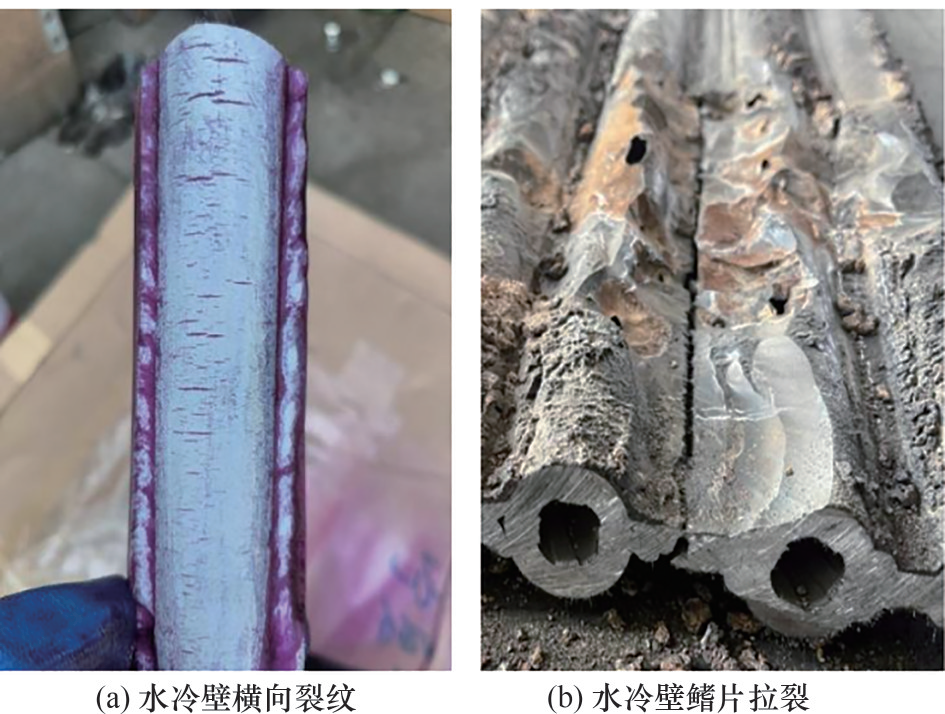
Working conditions below 30% rated load simultaneously weaken hydrodynamic characteristics of boiler water-cooled walls, giving rise to uneven in-tube flow distribution and reduced heat-transfer coefficients, which substantially lower heat-dissipation capacity of heating surfaces. Under routine deep-peak-shaving conditions, uneven heat load superimposes with hydrodynamic imbalance. Minor air-velocity deviations may trigger rapid over-limit of tube-wall temperature. Repeated long-term local overheating exacerbates high-temperature oxidation and creep deformation of tube walls, inducing defects such as scaling and cracks and significantly raising tube-burst risks. It also brings about boiler coking, uneven flue-gas temperature and increased exhaust-gas losses, severely impairing safety and economy of units during deep peak-shaving. Superposition of uneven heat load and weakened non-uniform water circulation may expand temperature differences of adjacent water-cooled wall tubes on the same wall to about 100 ℃, generating considerable thermal stress and threatening operational safety.
IV. Optimization System for Dynamic Air-velocity Balancing and Overheating Prevention Suited for New Thermal-power Conditions in the 15th Five-Year Plan
Targeting prominent problems including iterative coal-mill operating conditions, failed static-orifice-plate balancing and normalized ultra-low-load overheating after thermal-power transformation in the 15th Five-Year Plan, this paper abandons the traditional single static-balancing mode. A systematic overheating-prevention technical system adapted to routine deep peak-shaving is constructed from five dimensions: equipment upgrading, dynamic balancing, parameter coordination, logic iteration and working-condition adaptation.
(I) Phase out Single Static Balancing and Promote Upgrading & Treatment of Adjustable-orifice-plate Equipment
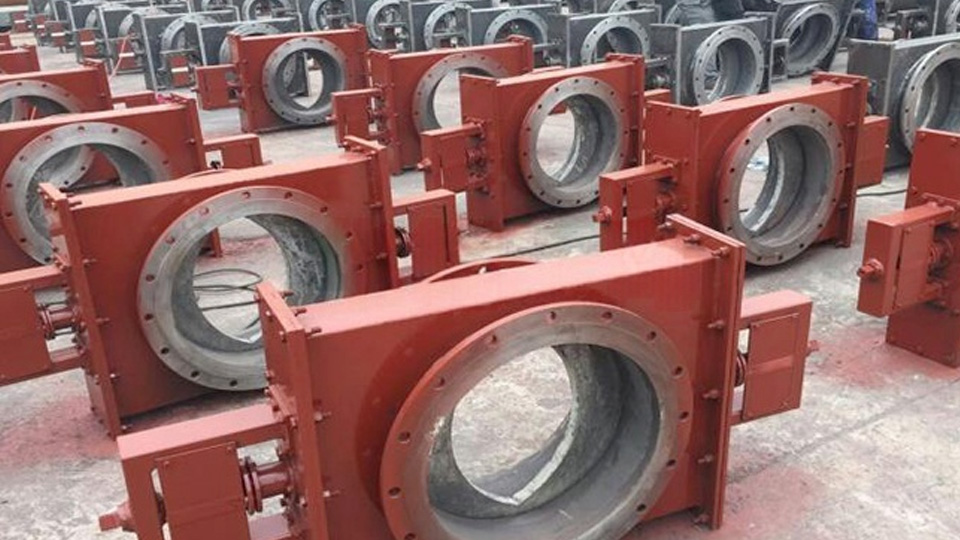
Carry out special upgrading and treatment for pulverized-coal-pipe throttling equipment to eradicate hardware defects of static balancing. Replace worn, jam-prone and low-precision old-style mechanical orifice plates with new high-precision anti-pulverized-coal-accumulation adaptive throttling devices. Inspect and calibrate all in-service orifice plates, clear pulverized-coal accumulation and coking, and repair deformed components to guarantee regulation linearity and feedback precision. Meanwhile, adapt to ultra-low-load pulverized-coal-accumulation features and establish regular purging, calibration and maintenance mechanisms for orifice plates to eliminate hardware-caused regulation deviations and lay solid equipment foundations for dynamic balancing.
(II) Establish Ultra-low-load Dynamic-balancing Mechanism to Replace Traditional Static Fixed-value Modes
Break the conventional one-time static balancing completed at high load, and build a phased-load, variable-working-condition and routine dynamic-balancing mechanism. Formulate exclusive air-velocity balancing criteria and calibration schemes for the 20%-30% ultra-low-load range, and discard calibration parameters obtained merely at high load. When units enter deep-peak-shaving conditions, real-time detection is performed on air velocity and pulverized-coal concentration of each pulverized-coal pipe. Orifice openings are dynamically fine-tuned combined with furnace-wall temperature and flue-gas-temperature distribution, so as to keep air-velocity deviations of pulverized-coal pipes within ±5% across all load ranges. Strictly implement parameter review-and-correction rules after load changes, thoroughly solving the core problem that static parameters cannot adapt to dynamic working conditions.
(III) Optimize Parameter Matching of Pulverizing Systems Under Ultra-low-load Conditions
Reconstruct parameter-regulation logic for pulverizing systems to fit routine deep-peak-shaving conditions of the 15th Five-Year Plan. First, moderately raise primary-air header pressure under ultra-low-load conditions. Stabilize flow fields on the premise of satisfying drying and anti-clogging requirements, and mitigate influences of resistance deviations on air velocity under laminar-flow conditions. Second, precisely match rotating speed of dynamic classifiers, and stabilize pulverized-coal fineness R90 within 18%-20% under ultra-low-load conditions to avoid over-temperature risks from excessively fine pulverized coal and poor burnout from excessively coarse pulverized coal. Third, optimize mill-group operation combinations. Prioritize stable-combustion operation of lower-layer mills, reduce extremely-low-output working conditions for individual mills, and mitigate internal-mill flow-field distortion as well as air-coal-distribution deviations.
(IV) Collaborative Optimization of Combustion Systems to Equalize Furnace Heat-load Distribution
Centered on dynamic air-velocity balancing, build an air-coal collaborative combustion-optimization system. Optimize secondary-air and over-fire-air proportions, reinforce air supply for fuel-lean zones in a targeted manner and suppress excessive-oxygen combustion in fuel-rich zones to equalize combustion intensity of each burner. Dynamically adjust over-fire-air opening to optimize flame-center position and curb local overheating of high-temperature superheaters and high-temperature reheaters. Establish linkage-regulation mechanisms among wall temperature, flue-gas temperature, pulverized-coal-pipe air velocity and air-distribution parameters, realizing dynamic coordination of air-coal distribution, combustion conditions and heating-surface temperatures, and equalizing furnace heat-load distribution from the source.
(V) Iterate DCS Control Logic and Solidify Intelligent Prevention-and-control Strategies for New Working Conditions
Relying on unit DCS systems, add exclusive deep-peak-shaving control modules and iterate traditional control logic oriented to base-load conditions. Input optimal control curves of air velocity, air pressure and pulverized-coal fineness for multiple ranges below 30% rated load to realize automatic accurate adjustment of pulverizing-system parameters under ultra-low-load conditions. Add intelligent early-warning and automatic-intervention functions for air-velocity deviation and wall-temperature over-limit to achieve proactive fault prevention and control. Solidify optimal dynamic-balancing experience into automatic control programs to adapt to frequent unit load variations and guarantee uniform air-coal distribution and stable heat load across the full ultra-low-load range.
V. Engineering Application Effects and Promotion Value for the 15th Five-Year Plan
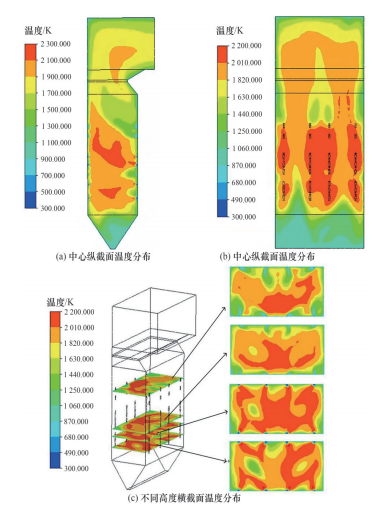
After adopting the comprehensive optimization system of “static-dynamic balancing plus systematic coordination”, operating performance of units during deep peak-shaving is greatly improved. Under conditions below 30% rated load, air-velocity deviations of pulverized-coal pipes are stably controlled within ±5%, and pulverized-coal-distribution uniformity is markedly enhanced. The air-coal imbalance problem induced by static balancing is thoroughly resolved. Furnace-flame distribution becomes uniform without deflection or wall-attachment phenomena. Deviations of heat-load distribution drop by over 80%, and the frequency of local overheating on heating surfaces decreases by 95%. Tube-wall creep, high-temperature oxidation and tube-burst risks are effectively avoided. Meanwhile, ultra-low-load combustion efficiency and denitrification operational stability are significantly enhanced, net coal consumption for power supply is effectively reduced, and safety margin as well as operating economy for deep peak-shaving are comprehensively upgraded.
During the 15th Five-Year Plan, regulatory attributes of thermal power keep strengthening, and ultra-low-load routine operation becomes a new industry norm. Traditional steady-state-adapted regulation technologies can no longer fit new working conditions. The dynamic-balancing prevention-and-control system proposed in this paper accurately matches pulverizing-system operating characteristics after thermal-power functional transformation. It fundamentally addresses adaptability shortcomings of static balancing. It provides replicable technical schemes for similar units to boost deep-peak-shaving capacity and ensure safe and stable ultra-low-load operation. It bears important engineering value for advancing thermal-power flexibility retrofits, supporting large-scale new-energy consumption and guaranteeing stable operation of the new-type power system.
VI. Conclusions
The 15th Five-Year Plan constitutes a critical window for thermal-power functional transformation. Units fully shift to grid-supporting regulatory functions. Routine deep peak-shaving below 30% rated load and frequent load variation force medium-speed coal mills to operate far away from design steady-state conditions for long durations. Designed for high-load steady-state working conditions, traditional static balancing technology with adjustable orifice plates has fundamental defects including poor dynamic adaptability, insufficient regulation capacity and limited working-condition adaptability. It acts as the core technical bottleneck for air-coal imbalance, uneven heat load and local overheating under ultra-low-load conditions.
The systematic technical system centered on dynamic air-velocity balancing, supported by equipment treatment, parameter optimization, combustion coordination and control-logic iteration, can precisely fit new thermal-power working conditions of the 15th Five-Year Plan. It addresses uneven pulverized-coal-pipe air-velocity distribution from the source, effectively equalizes furnace heat load and eliminates hidden hazards of ultra-low-load local overheating. Against the background of in-depth development of the new-type power system, routine implementation of ultra-low-load air-coal dynamic balancing and combustion optimization represents a key measure for coal-fired units to adapt to functional transformation, improve flexible regulation capacity and consolidate grid bottom-guarantee capability. It can provide solid support for safe and stable power-system operation under the “dual-carbon” goals.



010-67184197、13311211762
dtly@datonglongyuan.com
Room E1-301, Oriental Plaza, No.1 East Chang' an Avenue, Dongcheng District, Beijing, China

Follow The Official WeChat Account